Second Chance Scratch-Off Games: One Promotion, Two Chances to Win
Second Chance Scratch-Off Games: One Promotion, Two Chances to Win. Discover how second chance scratch-off games create instant winners, boost engagement, build customer lists, and

Consumers encounter registration forms, advertisements, and subscription requests throughout their daily online experiences.
A conventional form asking visitors to subscribe to a newsletter may provide little immediate motivation to participate.
Sweepstakes promotions introduce an additional element: the opportunity to win something of value.
When designed appropriately, these campaigns can:
Encourage consumers to interact with a brand.
Introduce new products, services, or promotional offers.
Attract potential customers through multiple marketing channels.
Create opportunities to request permission for future communications.
Provide measurable participation and campaign engagement data.
The objective should not simply be to generate the largest possible contact database.
A smaller audience of genuinely interested subscribers may provide more long-term value than a larger list of people who entered only for a prize.
Email and SMS marketing serve different communication purposes, and businesses should consider these differences when designing subscriber acquisition campaigns.
Email provides businesses with a flexible channel for sharing educational content, product information, promotional offers, company announcements, and customer communications.
An email subscriber relationship can support ongoing engagement through newsletters, personalized campaigns, and other relevant communications.
SMS marketing offers a more immediate communication channel, particularly for time-sensitive promotions, event reminders, product announcements, and limited-duration offers.
Because text messages reach consumers through a highly personal communication channel, clear consent, appropriate message frequency, and easy opt-out options are especially important.
Some consumers prefer receiving promotional information by email, while others prefer text messages.
Offering separate subscription choices allows participants to select their preferred communication channel.
For example, a sweepstakes registration form might offer:
An optional checkbox for receiving marketing emails.
A separate, optional checkbox for receiving promotional text messages, accompanied by the required SMS consent disclosures.
Neither subscription choice should be automatically selected or required merely to enter a sweepstakes.
This approach supports greater transparency and gives businesses a clearer understanding of subscriber preferences.
Traditional sweepstakes often involve completing a registration form and waiting until a future date to learn whether a prize has been awarded.
Digital scratch-off games introduce an interactive experience.
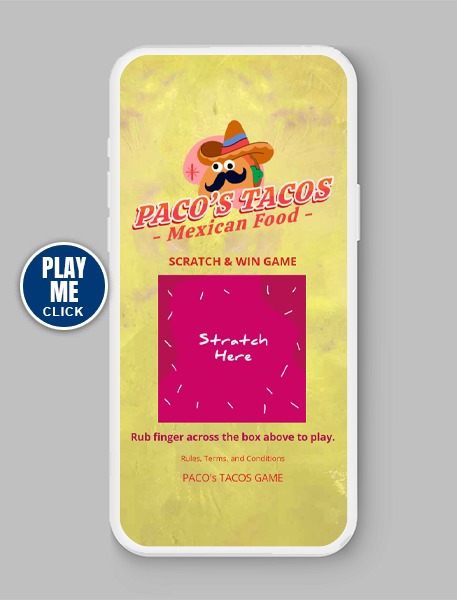
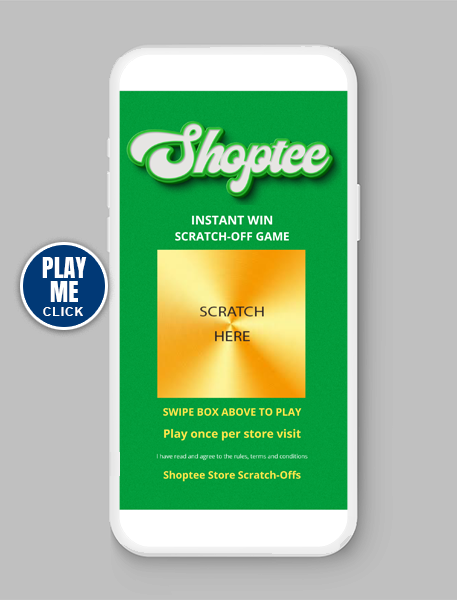
Participants can access a branded promotion from their smartphones, tablets, or computers and reveal a prize or promotional result through a digital scratching action.
Depending on the campaign design, the experience may include:
Accessing the promotion through a website link, QR code, email, or social media.
Reviewing the promotion’s rules and eligibility requirements.
Completing a registration form.
Making separate, optional email or SMS marketing subscription selections.
Playing the digital scratch-off game.
Receiving the game result and any applicable prize instructions.
The experience combines registration, brand interaction, and prize discovery within one coordinated promotion.
The important distinction is that completing a sweepstakes registration does not, by itself, establish permission to send future marketing messages.

Prize selection influences the type of participants a promotion attracts.
A business offering a large cash prize may attract considerable attention, but many entrants may have little interest in the company’s products or services.
Prizes connected to the brand can help attract a more relevant audience.
Examples include product samples, merchandise, service upgrades, gift cards, loyalty rewards, or exclusive experiences.
The goal is to encourage participation from people who may also have a genuine interest in the business.
Lengthy registration forms can create unnecessary friction.
Businesses should collect only the information needed to administer the promotion and support clearly disclosed purposes.
Depending on the campaign, this may include a participant’s name, email address, or other necessary eligibility information.
If the business also wants to develop an SMS marketing list, it should provide a separate, clearly explained subscription opportunity with the appropriate consent language.
Additional information can sometimes be collected later as the customer relationship develops.
An interactive promotion can be distributed through several existing marketing channels.
Examples include:
Website banners and landing pages.
Social media campaigns.
QR codes on packaging, signage, and printed materials.
Retail locations and point-of-sale displays.
Trade shows and promotional events.
Existing email newsletters.
SMS campaigns sent to appropriately opted-in recipients.
Using multiple channels can increase exposure while directing participants toward a consistent registration and game experience.
A sweepstakes registration form and a marketing subscription form serve different purposes.
Entering a promotion should not be presented as automatic agreement to receive ongoing promotional messages.
Businesses should clearly identify what participants are agreeing to, which organization will contact them, and how their information will be used.
For SMS marketing, disclosures may also need to address message frequency, potential messaging and data rates, and instructions for obtaining help or opting out.
Consent requirements depend on the communication method, jurisdiction, and campaign design.
A transparent approach helps businesses develop subscriber relationships based on informed choices rather than assumptions.
A sweepstakes may introduce a consumer to a brand, but the quality of subsequent communications determines whether that relationship continues.
For subscribers who have provided appropriate marketing permission, businesses can follow up with relevant content such as product education, useful tips, special offers, loyalty opportunities, and future promotions.
Email and SMS campaigns should reflect the expectations established during registration.
Sending excessive or unrelated promotional messages can undermine the goodwill created by the original experience.
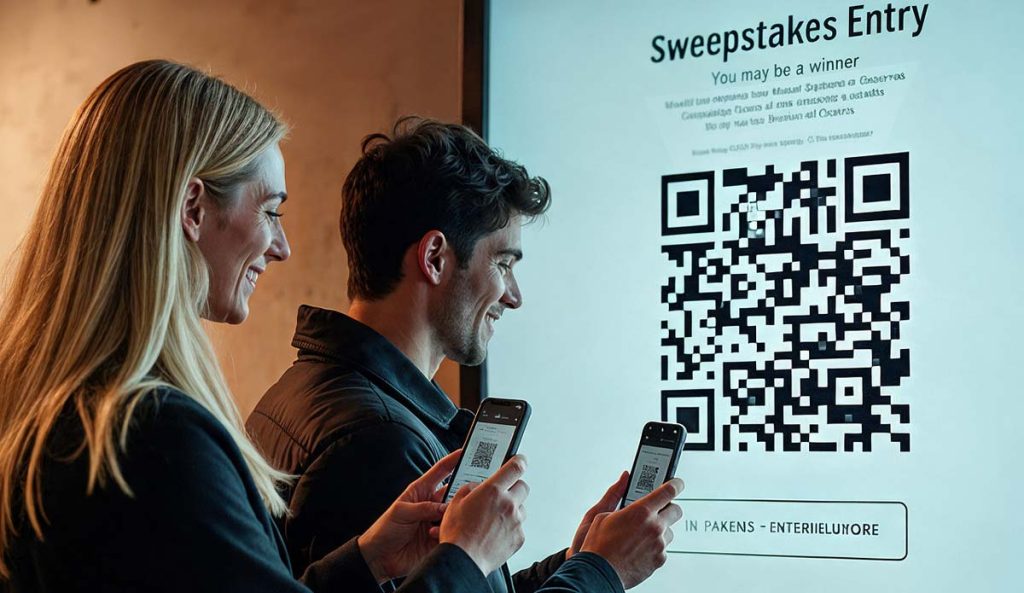
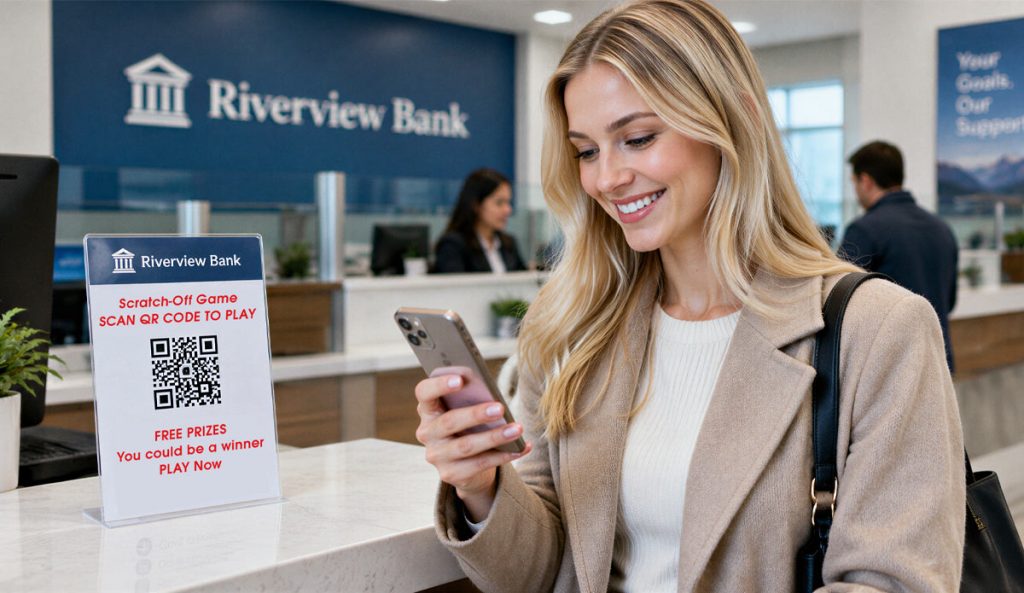
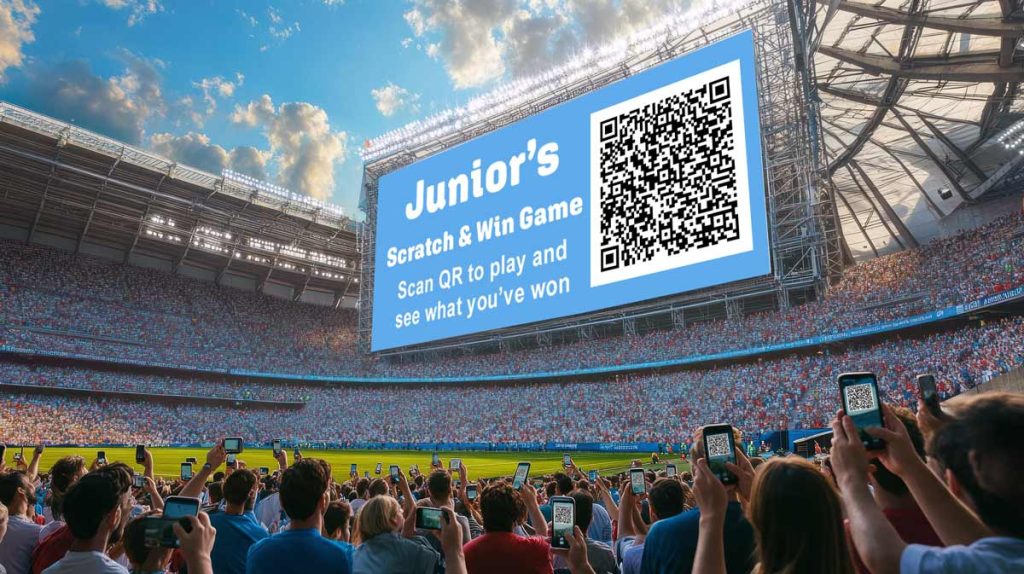
QR codes provide a convenient connection between physical promotional materials and digital experiences.
A consumer can scan a code displayed on retail signage, packaging, event materials, or a printed advertisement and access a sweepstakes using a mobile device.
This approach is especially useful for businesses seeking to connect in-person engagement with digital subscriber acquisition.
For example, a retailer could display a QR code near a featured product. Interested customers could scan the code, review the promotion, register, and participate in a branded digital scratch-off experience.
The registration process could also provide optional opportunities to subscribe to future email or SMS marketing.
Importantly, scanning a QR code or entering the sweepstakes should not be treated as consent to receive promotional text messages.
Successful campaigns should be evaluated using more than the total number of entries.
Businesses should consider several performance indicators.
| Metric | What It Measures |
|---|---|
| Sweepstakes Registrations | Total completed promotion entries |
| Email Marketing Opt-Ins | Participants who separately subscribed to email marketing |
| SMS Marketing Opt-Ins | Participants who provided the required SMS marketing consent |
| Subscription Conversion Rate | Percentage of eligible registrants who subscribed |
| Engagement Rate | Participant interaction with the promotion |
| Unsubscribe Rate | Subscribers who later withdraw marketing permission |
| Post-Campaign Conversions | Relevant purchases, inquiries, or other desired actions |
For example, a promotion receiving 5,000 registrations and 1,500 valid email marketing subscriptions would have a 30% email subscription conversion rate.
Those 5,000 registrations should not automatically be reported as 5,000 marketing subscribers.
Similarly, SMS subscribers should be counted only when the required marketing consent has been obtained and appropriately documented.
This distinction helps businesses evaluate the actual subscriber acquisition value of a campaign.
Privacy and regulatory compliance should be considered during campaign planning, not after the promotion launches.
In the United States, marketing email is generally subject to the CAN-SPAM Act, while marketing text messages may be subject to the Telephone Consumer Protection Act (TCPA), FCC rules, and applicable state laws.
Other jurisdictions may impose additional or different requirements.
Businesses should consider the following practices:
Publish clear sweepstakes rules, eligibility requirements, and prize information.
Provide any legally required no-purchase-necessary entry method.
Keep marketing consent separate from sweepstakes entry.
Use channel-specific disclosures and consent mechanisms.
Maintain appropriate records of marketing consent.
Provide functioning unsubscribe and opt-out mechanisms.
Explain how personal information is collected, used, retained, and protected.
Review applicable privacy, sweepstakes, and marketing laws before launch.
In particular, businesses should not assume that permission to send an administrative prize notification also authorizes ongoing promotional email or SMS messages.
Trust is not simply a compliance consideration. It is a fundamental part of building a sustainable subscriber relationship.

Digital scratch-off technology can provide the interactive component of a broader subscriber acquisition strategy.
Platforms such as Priiize™ allow businesses to create branded digital scratch-off promotions with registration forms, configurable prize experiences, and participant reporting.
Campaigns can be distributed through website links, QR codes, email, social media, and other promotional channels.
The collected registration data can help businesses administer promotions and evaluate participation.
Priiize™ supports the interactive promotional experience through branded digital scratch-off games, participant registration forms, and campaign reporting.
Businesses can use these capabilities to engage participants and collect registration information, while separately obtaining appropriate permission for future email or SMS marketing communications.
Priiize is not an email or SMS marketing delivery platform. Ongoing promotional messaging, subscriber consent management, opt-out processing, and marketing list administration are handled through the business’s existing email or SMS marketing systems.
This approach allows businesses and marketing agencies to incorporate interactive sweepstakes promotions into their existing marketing strategies without replacing their preferred communication platforms.
Yes. A sweepstakes can provide opportunities to invite participants to subscribe to both channels, provided each subscription is supported by the appropriate disclosures and consent requirements.
No automatic assumption should be made. Sweepstakes entry and marketing subscription should be treated as distinct activities. Applicable legal requirements vary by channel and jurisdiction.
Yes. Mobile-friendly digital scratch-off experiences can be accessed through links and QR codes, making them useful for campaigns involving smartphones and other connected devices.
Yes. SMS marketing providers and agencies can incorporate interactive sweepstakes into client acquisition and engagement strategies, while managing consent, subscriber records, and ongoing text communications through their marketing systems.
Both can be useful, but they measure different outcomes. Sweepstakes entries measure promotional participation, while valid marketing subscriptions represent people who have agreed to receive future communications.
Sweepstakes promotions can create valuable opportunities for businesses to attract attention, encourage interaction, and introduce consumers to their brands.
Digital scratch-off games add an engaging experience that can make participation more memorable.
However, sustainable email and SMS marketing depends on more than collecting contact details.
The strongest subscriber acquisition strategies combine relevant incentives, transparent consent practices, useful communications, and respect for consumer preferences.
When these elements work together, a sweepstakes can become more than a short-term promotion. It can serve as the beginning of a longer-term customer relationship.
Written by Dennis Romano, Founder of Priiize™ Digital Scratch-Off Games & Promotions.
This article is provided for educational purposes and does not constitute legal advice. Businesses should consult qualified legal counsel regarding applicable sweepstakes, privacy, email marketing, and SMS marketing requirements.





Second Chance Scratch-Off Games: One Promotion, Two Chances to Win. Discover how second chance scratch-off games create instant winners, boost engagement, build customer lists, and
Digital Scratch-Off Promotions for Banks & Credit Unions: 3 Flexible Campaign Strategies. Interactive Promotional Games for Banks, Credit Unions & Financial Institutions. Engage Customers and

How to Finish 2026 Strong: Q4 Promotion Strategies for B2B, Customer & Employee Engagement Digital Gets Attention. Human Validation Closes Confidence Gaps. The fourth quarter
Second Chance Scratch-Off Games: One Promotion, Two Chances to Win. Discover how second chance scratch-off games create instant winners, boost engagement, build customer lists, and

The QR Code Comeback: Bridging the Gap Between In-Store Foot Traffic and Digital Retention. For years, the QR code was the “tech that almost was.”

Point-of-Sale Sweepstakes & Promotions That Inspire Customer Interaction and Deliver Measurable Success The point of sale gives brands one of their most strategic opportunities to
Second Chance Scratch-Off Games: One Promotion, Two Chances to Win. Discover how second chance scratch-off games create instant winners, boost engagement, build customer lists, and

Branded Gamification That Drives Growth Across Every Location Unify your brand experience, energize your customers, and track measurable results across every store, franchise, or regional

Franchises and multi-location businesses are continually seeking innovative ways to drive foot traffic, engage customers, and foster brand loyalty across all their store locations.
Second Chance Scratch-Off Games: One Promotion, Two Chances to Win. Discover how second chance scratch-off games create instant winners, boost engagement, build customer lists, and

Stop Promoting Events. Start Engineering Engagement. Event marketing is broken—not because of attendance, but because of engagement. Here’s how interactive scratch-offs turn passive traffic into

Want to attract a crowd to your tradeshow booth? Try this. Standing out at a tradeshow isn’t easy when every vendor is vying for attention.
Second Chance Scratch-Off Games: One Promotion, Two Chances to Win. Discover how second chance scratch-off games create instant winners, boost engagement, build customer lists, and

Boost Employee Rewards with Proven Performance Metrics. By Dennis Romano In today’s workplace, keeping employees engaged and motivated is more challenging and essential than ever.

Reward employees working remotely – Engaging staff working remotely boosts business return on investment.
Second Chance Scratch-Off Games: One Promotion, Two Chances to Win. Discover how second chance scratch-off games create instant winners, boost engagement, build customer lists, and

Rethinking Text-to-Win Sweepstakes: Elevating SMS Promotions with Interactive Engagement Text-to-Win sweepstakes have long been a staple of SMS and sales promotion campaigns. Text-to-Win sweepstakes are

How SMS Providers Can Extend Client Value with QR Code QR code sweepstakes for marketers. As brands continue to seek measurable, privacy-aware ways to engage

From Instagram Comments to Verified Leads: How Gamified Scratch-Offs Convert Social Engagement By combining Instagram comments, ManyChat automation, and interactive digital scratch-offs, brands can now

How to Use YouTube to Drive Promotion Engagements YouTube can be a powerful channel to amplify Priiize Scratch-Off Game Promotions if used strategically. Step-by-Step Guide

Social Media Scratch-Off Games That Drive Engagement How Sharing, Tagging, and Participation Work in Social Media Promotions IntroductionSocial media is noisier than ever. Brands are
